Saturday, 26 January 2013

An Artist’s Love Affair with Technology


We are currently living in a century dominated by technological innovation and digital art is at the fore front of this innovation. Many artists have taken to creating art digitally rather than traditionally. New technology now allows artists to create drawings on different mediums, such as the computer or even an iPad! 


Take a look at the North American debut of David Hockney’s drawings and paintings on the iPhone and iPad: http://www.youtube.com/watch?feature=player_embedded&v=wzr6kPoxQhI. They were put on display as the Royal Ontario Museum in Toronto. Many of Hockney’s drawings have been referred to as ‘a digital kind of beauty’. 

However, some conservative art lovers, who remain under the impression that if art is not created using traditional tools, such as pens and watercolours, then they cannot be seen as “real” works of art. So, can digital art really be considered “real” art? 

Vincent Van Gogh

VS

 
 David Hockney


I would argue yes. Federico Fellini once said: ‘All art is autobiographical. The pearl is the oyster’s autobiography’, and I believe this to be completely true. In my opinion, art is a form of expression, an event that occurs between two different people. Essentially, one creates, and the other experiences the creations. If it is stimulating another person’s senses then it is art. This is true regardless of the field or medium. 

I do not think it matters whether the artist is holding a paint brush, or whether they are holding an iPad, as the end product is still a heartfelt expression of the artist him/herself. If an individual is responding to a drawing that has been created on an iPad or a computer, then of course it is still art. I believe it is just an artist’s personal preference as to which method they choose to create their art. Roman’s made mosaics using coloured stones. Yet, hardly anyone would argue that a mosaic is not a form of art. Roman’s were able to undo parts of the mosaic, just like a digital artist can on an iPad, for example. This does not mean that it was not considered a real form of art; it was just another medium which had its benefits. 

Some supporters of digital art have made the compelling argument that digital art is art, in the same way that digital animation is still animation and digitally created music is still music. Artists tend to see the world slightly differently to others, and try to capture what they see in the form of art, in the hopes that someone else will see it too. The medium used is really irrelevant. I’m pretty sure that artists who used oil paints must have felt slightly threatened when acrylic paints came along, but this doesn’t change the fact that both methods can be used to create artistic masterpieces. It’s really in the hands of the artists. The more notable advantage of using an iPad to create a piece of art rather than oil paint or acrylic paint is the fact that there is just less of a mess to clean up afterwards!


In society today, ‘the value of [an] object depends on its rarity and status gauged by the price it fetches on the market’. Thus, some people believe that if you create something that is digitally transferable or digitally created, there is little value in the finished good. With traditional handmade art, the original is always seen to be the most valuable, not matter how many times it is replicated. A two dimensional image cannot be rendered unique by its dimensions, the brush stroke, or even the texture of the paint. Digital art can be replicated without showing any difference between the original and the copy. Also, with digital art, you can’t exactly hang it on your wall, or hold it in your hand, which is a drawback. However, I do not believe that this means that digital art it of no value at all. Time and effort is still put into creating digital art. Just because an artist is using an electronic or digital medium to create art, does not mean that the method is any should be less valued than traditional art, just because it was not created in a conventional way. 

I’m not saying that things aren’t easier for them with modern digital tools. Yes, there are some digital artists that allow iPads and other types of technology to just do most of the work for them. In such as case very little of the artist’s talents shine through because they have relied so heavily on the art functions available to them to do the work for them. However, this is not true for all digital artists. William O’Connor and Raymond Swanland are two examples of digital artists that do not use photographs, texture fill, gradient, or any other type of electronic program to create their art. They only use a pure painting function.


Digital artists are always trying to push the boundaries meaning that they are always trying to push their skills to a new level. An artist using an iPad to create a piece of art just has less of a mess to clean up afterwards! I personally think that digital art might actually be raising the bar a little! Digital art tools are so easily accessible that there are a vast number of individuals creating digital art. But does this not mean that with so much competition even the best have to now do better in order to stand out? 

I believe that digital art is still trying to establish its place within art culture. It has only been around for approximately 40 years, in comparison to around 42,000 years of traditional paintings. However, this does not mean that it is not ‘real’ art.


Sunday, 20 January 2013

Wiki: The Syrian Civil War (Analysed)

So, I’m going to assume that almost everyone is familiar with Wikipedia. I have mentioned it a few times in my previous blog posts. It is well known for being ‘an online free-content encyclopaedia that anyone can edit’, which in my translation basically means that anyone can cite themselves as an expert on anything and everything, even I can! Wikipedia aims to ‘bring knowledge to anyone who seeks it’ and seems to have a page on almost everything. But how accurate are these pages? Can Wikipedia really be regarded as a “reliable” source? In the following piece I will look specifically at the Wikipedia page on the Syrian Civil War.

The Wikipedia page on the Syrian Civil War was first created on 3rd February 2011. The content available on the page when it was created was no more than a few lines. The page simply stated that protests in Syria were expected to begin on the 4th and 5th of February in front of the Parliament in Damascus, in a demand for freedom and the end of the emergency law.

Looking at the page content on the 19th of February 2011 almost two weeks after the protests were said to have begun; the information on the page seemed to have evolved to include details about the various protests that had taken place since the 4th of February. By the 1st of May 2011, the page had further evolved to include the history of Syria and the government, a timeline of events, support for the government, support for the opposition, concessions, and much more. Viewing the page today, the word count stands at approximately 15,000 words giving a detailed account of the Syrian Civil War to date, including background information. It is fair to say that this word count will continue to increase, as the War is still ongoing.

But how accurate is the information on this page? Before even looking into the details given on the page it is important to note than anyone can add or change the content on the page. Thus, the reliability and stability of the page can be questioned from the offset. Looking at the profile of just one of the editors of the page, I can see that the author is not an expert on the topic. For me, the fact that this author has no relevant expertise on the subject, leads me to believe that there is room for errors, misinformation and bias on this page. Almost any edits about ongoing Civil Wars are likely to be controversial as politics is involved! When it comes to politics everyone has their own personal stance, and this is obviously going to be reflected in their writing. I think it is very difficult for an individual to remain completely objective. Furthermore, even less information is given about many of the other editors. Interestingly, in the talk section of the page on editor was “who are you working for”? For all we know, someone is paying them to write what they have!

Taking a closer look at the talk section of the page, which provides editorial disputes over various sections of the page, I can see that there are many ongoing disputes amongst the editors of the page themselves. Looking specifically at the propaganda section, one editor wrote how before they made their contribution, the ‘propaganda section was like propaganda itself’ as it was ‘100% about the Syrian Government’, thus it was not balanced. Following the editors changes, another editor notes how the balancing additions are ‘unprofessional’, and how some of the sources used to balance the section are unreliable. In particular, there is much dispute over the use of ‘Russia Today’ as a source. Many editors argue that because Russia Today is run by the Russian state, it is an unreliable source. The sources are also accused of being censored. One editor wrote: ‘I think censorship is being practiced here. I think it's an abuse of Wikipedia’.

The page is also accused of failure to keep a secular opposition. One editor argues that the most relevant opposition in Syria today are the Islamists, and yet they are not reflected in the article at all. The only reference I could find was: ‘Clan leaders in Syria claim that the armed uprising is of a tribal, revenge-based nature, not Islamist’. Looking at another article I found that the FSA suggest that its top commanders see the Islamists as ‘a threat to stability post regime change’. Surely this information is relevant to the page? However, another editor notes how the page is a summary of the Civil War, and that only a sentence or two needs to be spent on the growing power of Islamists. The editor argues how details about the opposition should go in their main pages.

Although there does appear to be a number of issues between editors on 7 of the subsections that appear in the article, that still leaves a vast number of sections left undisputed. That must mean that these sections are reliable right? Maybe, however, I would still argue that one cannot fully establish the reliability of the information in these other sections. Just because an editor has not disputed it, does not make it wholly reliable!

When I took a closer look at the ratings for the page I found that the current average was 1 in relation to the following categories: trustworthy, objective, complete and well-written. Each of the sections had an average of 576 ratings, which is not a substantial number of votes, for the number of views on the page, but still a noteworthy number.

With the Syrian Civil Page being such an extensive page, it would appear as though much effort has gone into making the article as detailed as possible and attempts have been made to make the information as accurate as possible. In particular, this can be seen by the substantial number of edits that have been made to the page since it was created, and the efforts of the editors to resolve disputes and add or change the content accordingly.

I would argue that the motivations of the editors to make this article are largely to inform the public of what is going on with regards to the Syrian Civil War. I do not believe their motives to be any more or any less. Thus I believe that the page is being written in good faith, however, I still would not consider it to be a reliable source of information, mainly due to nature of Wikipedia. Not only this, but as this is an ongoing political dispute, I believe it to be a highly controversial issue anyway and I believe the page reflects this.

Thursday, 17 January 2013

Journalism: Switch 2 Data Mode

Traditional forms of media, such as print and television, are becoming progressively less popular as much of the new generation has turned to the internet as their main source of information. Not only can people access the news on their computers, but they can also access it on their mobile phones and tablets, without any hassle. I almost expect the news to be pushed to me on Facebook, Twitter, email etc. Such possibilities have created a worldwide audience that expects news on a variety of platforms, almost instantaneously. Thus, journalism has also advanced towards being data based (data journalism) to keep up with the new day and age. Both data and journalism are not actually simple though. When we think of data, we think of numbers; however this is not actually the case...

Online journalism today now requires an appreciation of the importance of data, of facts and figures, by all journalists. The ways in which data is used to tell stories has changed drastically with the advancement of digital journalism. Data and numbers are manipulated by journalists to get them the results significant to them. These days, journalists are required to have specialist skills, to do with coding and development, or numeracy and understanding especially if they are writing stories that will be published online. At the same time they are still required to find and tell stories in a clear and simple manner.

I think this is very much to do with the visual storytelling. Graphics and other types of data help a journalists tell their story, especially with online news; many people tend not to read online articles word for word. Instead, they look for visuals that help them quickly grasp an idea of what the article is trying to say. This can be done using pictures, audio and videos, not just graphics.

‘An awareness of how social media works and how social networks relate to news’ has become a key factor in digital journalism as stated by BBC News editor Steve Herrmann. Journalists are now required to understand exactly how to use social networks for newsgathering ‘and to understand how to leverage social media to find out things, to get in contact with people, to talk to people and to spot trends’.


One noteworthy type of data we should consider is live data that is not actually stored anywhere, rather, will be produced at a particular time. One example of this is the way in which newspapers are increasingly using Twitter commentary to provide eyewitness accounts or context to a particular debate. Take for example a plane crash, an earthquake, a flood or a terrorist attack, any breaking news that takes place in a community, anyone who has seen and experienced the news event will tweet about it. One of the biggest challenges faced by journalists in covering such news is always trying to find people who have witnessed the event or were affected by it. If a journalist uses Twitter’s advanced search feature, then they are able to quickly find and connect with these people and are able to get interviews, and quotes, or even able to embed their tweets into their stories. 

'Idol' star Elliott Yamin 'tweets' real-time reports from earthquake-ravaged Chile (2010):


As part of the Guardian’s coverage of Tony Blair’s appearance at the Chilcot Inquiry into the Iraq War, they used the data of thousands of ‘tweets’ to provide a ‘sentiment analysis timeline of how people reacted to the particular parts of his evidence as it went on’. There have been many other timelines like the one just discussed being produced for political debates and speeches to measure public reactions on certain issues. Social media is also now an excellent way for journalists to get their own work and own journalism out as a means of distribution.

However, I do believe that the news media are struggling to keep up with the demands of online readers. Journalists are being pressured to publish news online as soon as it happens; even if that means that what they are publishing may be of poor quality. They are expected to tweet live from events. They also have to compete with bloggers, and the general public. Now more than ever, the audience is playing a vital role. They can produce, demand, and fund news as they please, once they find it that is!

Tuesday, 15 January 2013

The Internet: The Risky Leap Forward.

I remember when I was able to sign up to a site without any hassle, a quick process, not as simple anymore. In the past 2-3 years CAPTCHA has been implemented to sign up and sign in processes because of spam, thanks spammers!


CAPTCHA is not the only thing that has made a sign up process longer, there are several security measures that we have to go through because of certain types of people known as hackers

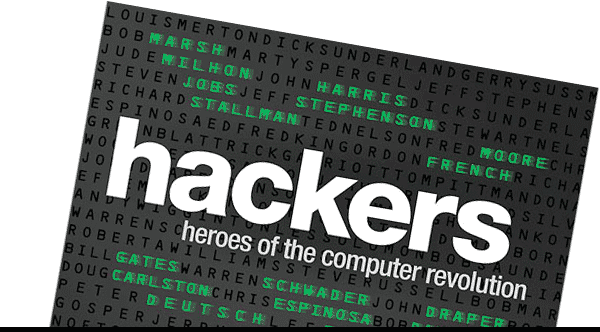
Hackers are people who are very intelligent when it comes to computers and the web. They use things such spyware to infiltrate other peoples personal belongings and even hack major organisations and websites. Hacking has become very common and things such as anti-spyware and anti-virus have been introduced to counter attack these hackers.

Hacking is only possible via the internet/computing; and as long as these exist, there will always be hackers and they will always find alternative routes to meddle.

There are different types of hackers and they all possess different motives. Some hackers want your credit card details, some want to get a point across and others do it to dig out information

An example of hacking would be the phone hacking scandals in the U.K. which saw the spear head of British tabloids News Of The Worlds imminent conclusion. This hacking saga has been on going for some time now; as most recently Detective Chief Inspector April Casburn, 53, was found guilty of leaking information to News Of The World. (Read the article HERE)


Hacking is ILLEGAL and if found guilty of hacking, a person could face severe sanctions. I mentioned News Of The World earlier on in this post. They were forced to close down after a streak of phone hacking incidents. But are hackers really fussed? Have these sanctions brought an end to hacking? Are we all safe? The answer is no. 

There is a hacking group known as Anonymous who are what their name says they are: 'ANONYMOUS'. They have been around for some time now and have never been found out or caught for their criminal act. Their agenda for hacking seems to be politically motivated.

Here is a video of Anonymous:


As we are all aware, Fox news is a huge corporation and if they are vulnerable to hackers then how are WE smaller organisations and individual people safe? The internet has become a cyber imitation of the world that we live in. We have friendly people on the internet and we have criminals such as pedophiles and hackers. How are we able to feel safe over the internet and our smartphones device when even detectives are guilty of hacking? 

As a frequent internet user I am extremely cautious now when I am surfing the web. I don't just worry for the topless photo's on my phone or the £1.50 in my bank account, I worry for the safety of my future. If the internet keeps becoming more exposed then the people who use the internet will be more prone to becoming exposed with it.


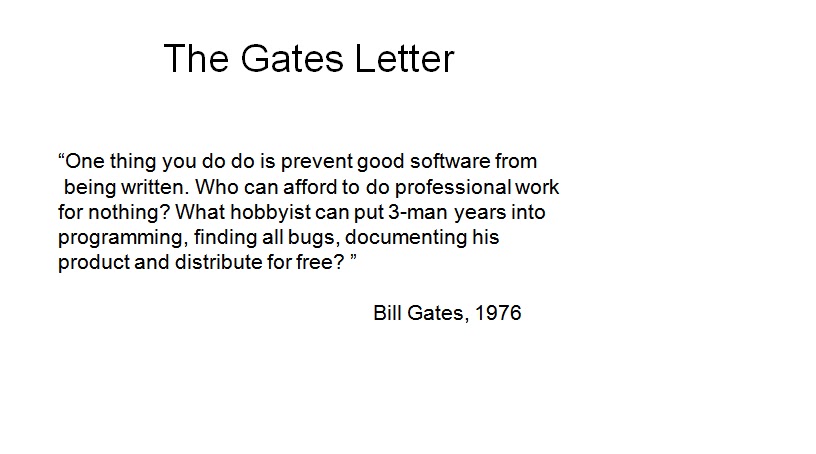
Hackers also leak well recognised software from world renowned corporations such as Adobe and Microsoft as free downloads on the internet. They make the software free using various methods, patches and key generators which are commonly found through torrents and file sharing websites.